Why Your Supply Chain Team Hears About Delays From the Customer First

Abitha Jeyaraj, Marketing Executive
October 2, 2026 · 12 min read

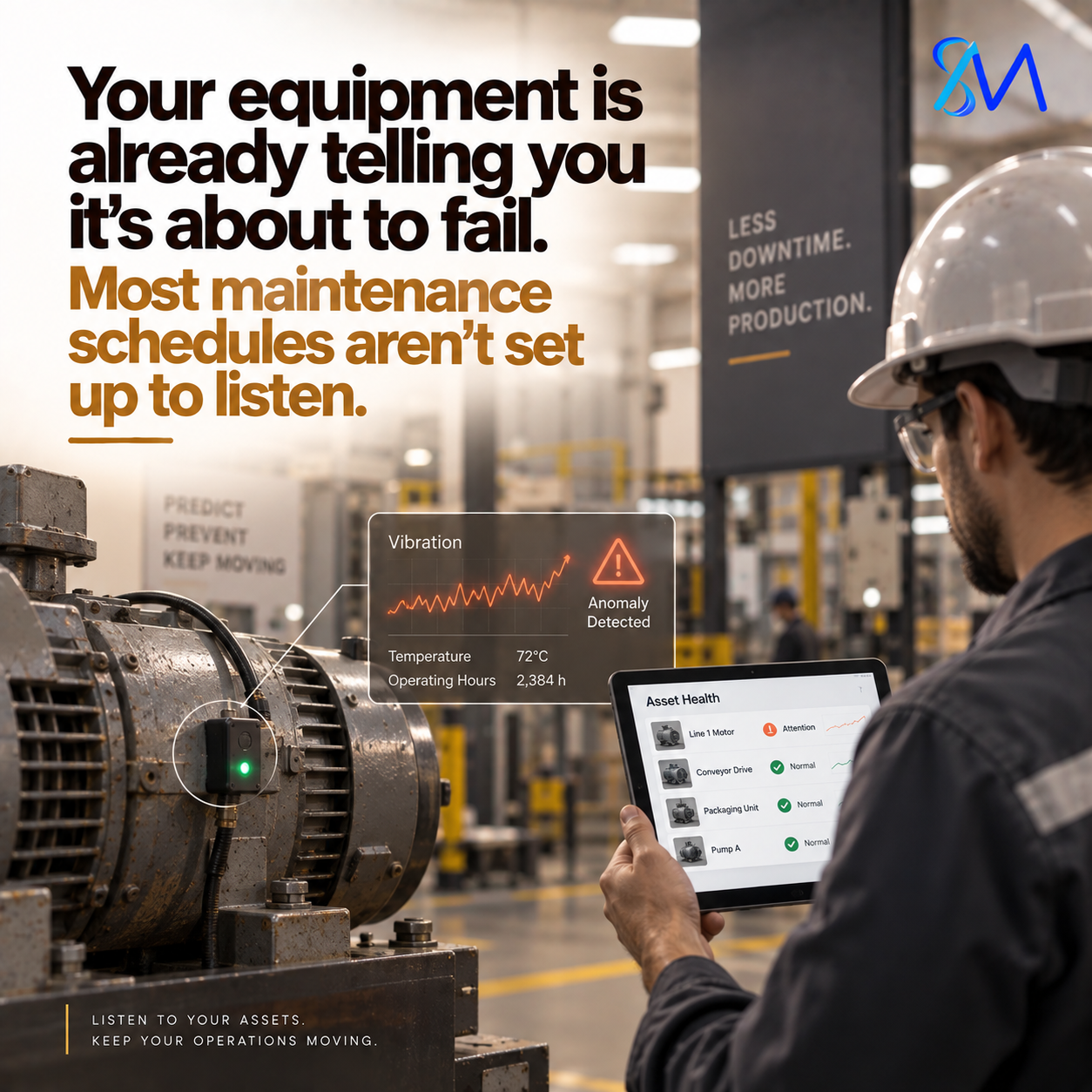
Across our 500+ successful projects, one operations pattern repeats with remarkable consistency. A supplier moves a delivery date by two days, the update lands in someone’s inbox, and the ERP keeps planning production around a date that has already changed. The supply chain team is capable and committed, yet the first clear signal of the delay often arrives from the customer asking where their order is. Supply chain visibility is the quiet difference between a team that plans around a delay and a team that explains one after it has happened.
For a COO or VP of Operations, the cost of this pattern sits in places that rarely get labelled as visibility problems. It appears as expedited freight approved late on a Thursday, overtime booked to recover a schedule, a production line resequenced at short notice, and a key account manager rebuilding trust on a call that started with an apology. Each of these is recorded as a separate operational expense. Together, they form one of the most predictable and most recoverable margin opportunities in a manufacturing or distribution business.
In this article, we share how we approach supply chain visibility inside SAP, Microsoft Dynamics, Odoo and Zoho environments, the framework we use to make a date change travel through every dependent plan automatically, and what operations leaders typically gain once supplier updates, purchase orders, inventory and production schedules start working from one live timeline.
The delay is rarely where it first becomes visible. Most operations leaders who take the ERP Fit Quiz find the real gap sits one handoff earlier than where they have been looking.
Ten questions, sixty seconds, and a personalised Business Readiness score that shows exactly where your visibility breaks.
→ See Where Your Operations Actually Stand in 2 Minutes
→ Speak with Our Team
The Latest Update Someone Remembered to Send
When we run discovery workshops with operations teams, we ask a simple question early: where does a supplier date change go first? The answers are revealing. It goes to a buyer’s email, a WhatsApp group, a supplier portal that nobody checks daily, or a spreadsheet maintained by one planner who knows the history of every vendor. The ERP, which is the system every downstream plan depends on, is often the last place the change arrives, and sometimes it never arrives at all.
This happens in well-run organisations for a sound historical reason. Most ERP implementations were scoped around transactions: raising a purchase order, receiving goods, posting an invoice. The confirmed delivery date was treated as a field entered once at order creation, not as a living signal that changes several times between order and receipt. In our engineering reviews, we consistently observe that the purchase order record is accurate on the day it is created and gradually drifts away from reality as the supplier’s own plans evolve.
A purchase order date that nobody updates becomes a planning assumption that nobody questions. Production, inventory and customer commitments all inherit that assumption, so a two-day supplier slip can quietly become a five-day customer delay.
The second reason is structural. Supplier communication, inventory positions, material requirements planning and production scheduling often live in different modules or entirely different platforms. A mid-sized manufacturer might run Odoo for inventory, a separate MES on the shop floor, Zoho CRM for customer commitments, and supplier updates through a mix of EDI and email. Each system is correct about its own slice of the picture. Supply chain visibility requires those slices to agree on one timeline, and that agreement is an integration and workflow design question rather than a software purchase.
Where the Signal Gets Lost Between Systems
Before designing any integration, we map what we call the signal path: the exact route a single supplier date change takes from the moment the supplier knows about it to the moment the customer feels it. Across our ERP and CRM engagements, the same five handoff points account for nearly every late signal. Naming them clearly is the first real step toward supply chain visibility and often the most useful hour of the entire programme, because it turns a vague sense of “we are always reacting” into a specific list of fixable gaps.
| Handoff Point | What Typically Happens | What Connected Visibility Looks Like |
|---|---|---|
| Supplier to buyer | Date change arrives by email or phone | Supplier confirmation updates the PO line through portal, EDI or API |
| Buyer to ERP | Manual update, often batched weekly | Confirmed date writes directly to the purchase order record |
| ERP to production plan | MRP runs overnight on stale dates | Dependent work orders flag automatically when material dates move |
| Production plan to inventory | Safety stock absorbs the gap silently | Available to promise recalculates against the new material date |
| Inventory to customer commitment | Sales learns at dispatch time | CRM order status reflects the revised ship date while options remain open |
What makes this map valuable is that it shifts the conversation from blame to design. Teams stop asking who forgot to send the update and start asking which handoff should carry the update automatically, which is where supply chain visibility becomes a design decision. In our experience, two or three of the five handoffs usually account for most of the delay, which means a focused integration scope can deliver a large share of the benefit early in the programme.
How We Make a Date Change Travel Through Every Plan
Our approach to supply chain visibility follows the same principle that guides all our CRM and ERP work: we discover how the business actually operates first, then configure the platform around that reality rather than asking teams to reshape their work to fit a default module. Over 6.8 years of average client partnership tenure, this principle has proven to be the single strongest predictor of whether teams genuinely adopt a new workflow or quietly return to their spreadsheets.
We structure every supply chain visibility programme around a four-stage framework we call Signal, Sync, Cascade and Govern. Each stage has a clear output, a named owner on both sides, and a measurable checkpoint before the next stage begins.
- Signal: We identify every source of supplier date information, including portals, EDI feeds, email confirmations and carrier tracking, and agree on which source is authoritative for each supplier tier. The output is a source of truth matrix that removes ambiguity about which date the business trusts.
- Sync: We connect those sources to the purchase order record inside SAP, Microsoft Dynamics, Odoo or Zoho through API orchestration, so a confirmed date change updates the ERP without a buyer retyping it. Where suppliers cannot integrate directly, we build lightweight confirmation workflows that still write structured data back to the PO line.
- Cascade: We configure the dependency logic so that a moved material date automatically flags every affected work order, recalculates available to promise, and updates the expected ship date visible in the CRM. This is the stage where supply chain visibility turns into action.
- Govern: We define exception thresholds, escalation owners and a weekly review rhythm, so the team focuses its attention on the changes that genuinely affect customer commitments rather than every minor adjustment.
The Cascade stage deserves particular attention, because it is where most organisations see the largest operational shift. When a supplier slips by two days, the planner no longer discovers the impact during the next MRP run or at the morning stand-up. The ERP surfaces the specific work orders, the specific customer orders, and the specific ship dates that depend on that material, while there is still enough time to reallocate stock, resequence a line or agree a revised date with the customer on the business’s own terms.
We pay equal attention to the people side of the workflow. A cascade that generates fifty alerts a day is noise, not supply chain visibility. During configuration, we work alongside planners and buyers to calibrate thresholds so that each alert represents a decision worth making. Training and adoption support are built into the programme from the first sprint, because supply chain visibility only creates value when the team trusts the timeline enough to act on it.
Building on the Platforms Your Team Already Uses
One of the most common questions we hear from operations leaders is whether better supply chain visibility requires replacing their current ERP. In the large majority of cases, it does not. SAP, Microsoft Dynamics, Odoo and Zoho all provide the core data structures needed for date propagation. What is usually missing is the integration layer that connects external supplier signals to those structures and the workflow logic that carries a change from one module to the next.
| Operating Model | Reactive Supply Chain | Connected Supply Chain Visibility |
|---|---|---|
| First awareness of a delay | Customer enquiry or dispatch failure | Supplier confirmation change, flagged in the ERP |
| Planning basis | Original PO dates and planner memory | Live confirmed dates from authoritative sources |
| Recovery options | Expedited freight and overtime | Stock reallocation, resequencing, proactive customer dialogue |
| Leadership reporting | Rebuilt manually each week | Exception dashboard drawn from one timeline |
Working within the existing platform also protects the investment the business has already made. Data structures, user permissions and reporting continue to function, and the team learns one improved workflow rather than an entirely new system. This is a significant reason our ERP programmes maintain a 98% on-time release rate: a well-scoped integration on a familiar platform carries far less delivery risk than a full replacement.
What Delivery Discipline Looks Like in Practice
Programmes of this kind touch purchasing, planning, production, warehousing and sales at the same time, so delivery discipline matters as much as technical design. Across 150+ enterprise launches, we have refined a delivery model for supply chain visibility work that keeps every function aligned while the integration is built in measured increments.
Each supply chain visibility programme begins with a focused discovery and calibration phase in which we complete the signal path map and agree the scope for the first release. Integration then proceeds handoff by handoff, starting with the two or three points that carry the most delay, and each release goes live with a defined success measure such as the share of PO lines carrying a supplier confirmed date or the lead time between a supplier change and a customer status update. Because the core team brings an average of 7 years of engineering experience, and we can draw on 120+ specialists on demand for platform specific work in SAP, Dynamics, Odoo or Zoho, the team composition adapts as the programme moves from integration into workflow and adoption.
The organisations that sustain the strongest supply chain visibility treat it as an operating rhythm, not a one-time integration. The weekly exception review is where the investment compounds into better supplier relationships and more reliable customer commitments.
We also design for the long term from the first sprint. Supplier bases change, new product lines are introduced, and acquisitions bring new systems into the landscape. The Signal, Sync, Cascade and Govern framework is built to absorb those changes, so adding a new supplier tier or a new warehouse becomes a configuration step rather than a new project. Supply chain visibility designed this way keeps improving as the business grows, and this is one reason clients stay with us for an average of 6.8 years: the foundation keeps paying back as the business grows.
What We Deliver for Supply Chain Visibility
For manufacturers, distributors and wholesalers ready to move from reacting to delays to planning around them, we deliver a focused supply chain visibility and ERP integration programme built on the platform you already run. The programme connects supplier updates, purchase orders, inventory positions and production schedules into one live timeline inside SAP, Microsoft Dynamics, Odoo or Zoho, with customer facing ship dates in your CRM updating from that same timeline.
Specifically, the engagement includes the signal path discovery workshop and source of truth matrix, API orchestration and supplier confirmation workflows, cascade logic configured to your planning rules, an exception dashboard for operations leadership, and hands-on training and adoption support for buyers and planners. Every stage is delivered with the same governance that underpins our 98% on-time release rate across more than 500 projects for clients in the US, UK, France, Europe, Brazil and Asia.
The outcome is a supply chain team that sees a delay at the moment the supplier knows about it, a planning function that adjusts while every option is still available, and a customer conversation that begins with a revised plan rather than an apology.
The clearest starting point we have seen: know what your operations are actually ready for before deciding what to connect first.
The ERP Fit Quiz surfaces that picture honestly, with no interpretation required.
The Earlier a Delay Is Visible, the More Choices Your Team Has
Every supply chain experiences supplier delays, and supply chain visibility determines what happens next. What separates the operations that protect their margin and their customer relationships is how early the delay becomes visible and how quickly that visibility reaches every plan that depends on it. Expedited freight, overtime and difficult customer calls are not inevitable costs of doing business. They are signals that information is arriving later than it could.
Supply chain visibility built into the ERP changes the shape of the problem. A supplier slip becomes an early decision point rather than a late surprise, planners spend their time choosing between good options rather than recovering from limited ones, and leadership reviews one trusted timeline instead of reconciling three versions of the truth. We have built this capability across SAP, Microsoft Dynamics, Odoo and Zoho for organisations in multiple industries and regions, and the pattern of improvement is consistent.
Your team is already capable of excellent planning. The opportunity is to give them the information early enough to use it, because the most valuable day in any delay is the one before your customer notices it.