The 3 Operational Secrets to Guaranteed Frontline Tech Adoption and Secured Rollout ROI

abitha
June 22, 2026 · 5 min read
Every CEO approves the budget. Few are told what actually decides the ROI. Frontline tech adoption, the variable that converts a technology investment into a measurable business outcome, is determined by three operational moves made early in the programme. These moves are made, or skipped, long before the system goes live. They are not in the project plan. They are not in the vendor’s implementation guide. They show up as the explanation for why some rollouts deliver the ROI in the business case while others schedule a retrospective at twelve months and quietly adjust the targets.
What the Average Enterprise Rollout Gets Wrong About Adoption
The average enterprise technology rollout treats adoption as the final chapter of a deployment story. Build. Launch. Train. Adopt. The implicit assumption is that adoption follows naturally from a successful go-live, and that the organisation’s job is to deliver the system, after which the frontline team’s job is to use it. This assumption is expensive. Across our 500+ enterprise projects, the programmes that plateaued at 35 to 50% adoption depth within the first quarter shared a single common pattern: adoption was planned for, not designed in.
The three secrets below are not complex or costly. They are early decisions that change the entire adoption trajectory of a technology investment. Each one addresses a specific failure mode that conventional rollout planning leaves unresolved.
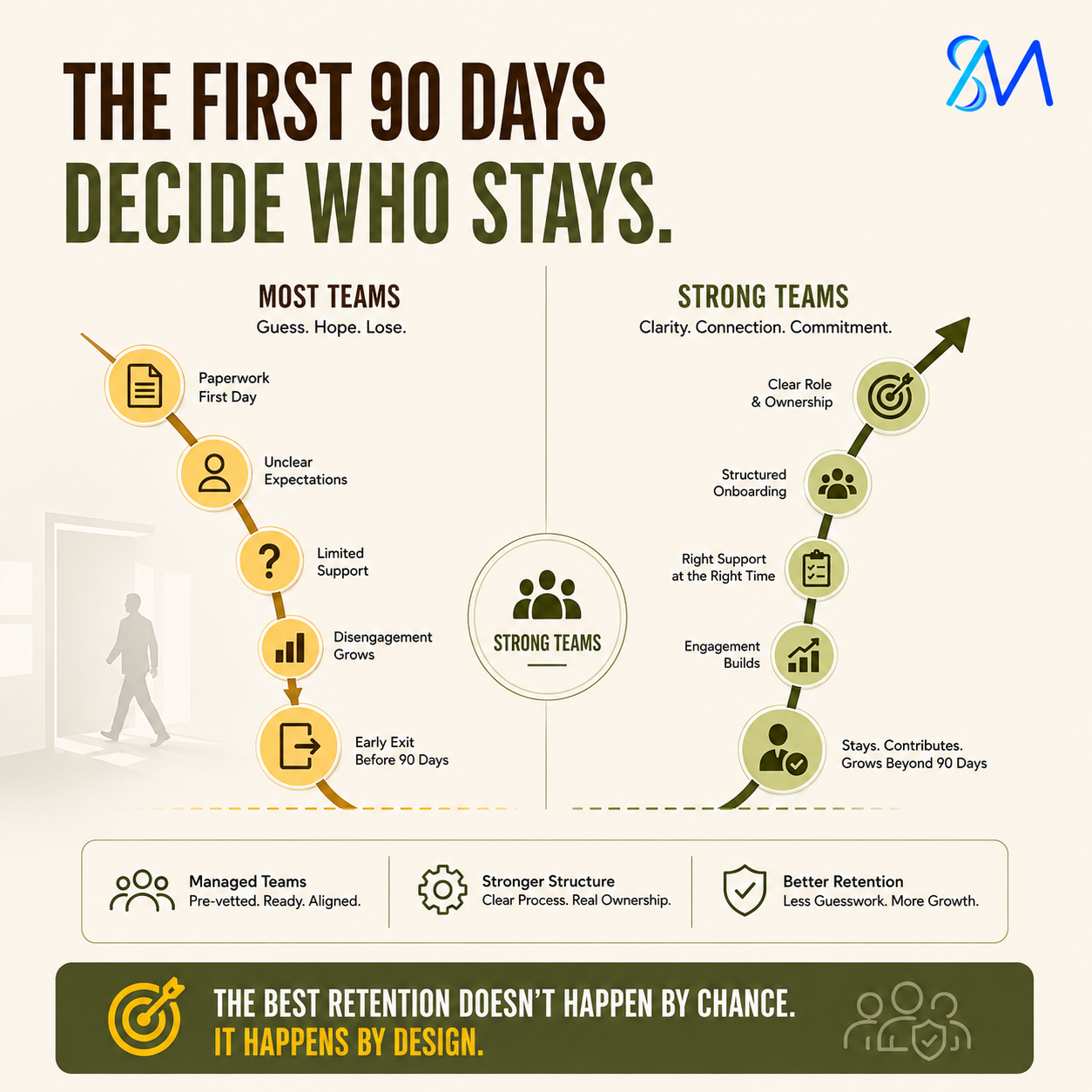
The teams that scaled delivery without scaling chaos did not hire faster — they changed how work was structured. The difference is visible in how their first two weeks of onboarding looked.
Secret One: Recruit Frontline Champions Before the Vendor Demo
The people who will live in the tool daily have the clearest view of where it will help, where it will create friction, and what workflow compromises will quietly undermine it after launch. Recruiting frontline champions before procurement means those perspectives shape the requirement rather than react to the system after it is built. The practical outcome is a system configured around how work actually flows rather than how leadership assumes it flows. The adoption outcome is that frontline teams arrive at go-live having already shaped the system, which creates an ownership dynamic that conventional training cannot manufacture.
The rollouts that delivered ROI across our 500+ project portfolio changed how work flows, not just where data lives. Adoption starts as ownership when the right people are in the room before the vendor is on the shortlist.
Secret Two: Redesign the Workflow, Not Just the Software
Enterprise technology is most frequently deployed into unredesigned workflows. The software changes. The process stays the same. The result is a more expensive version of the existing problem. The organisations achieving lasting adoption from their technology investments redesign the workflow and the software as a single integrated scope. This is not a change management exercise. It is an engineering decision that happens during configuration. In our CRM and ERP deployments, the configuration work that produces 6.8-year average client partnerships is almost entirely workflow redesign delivered alongside system build, not after it.
Secret Three: Measure Adoption Like Revenue
The adoption metrics that predict ROI are not attendance records or login counts. They are active usage depth, measuring whether users are completing the full workflow the system was designed to support. They are workaround rate, measuring how often the old method reappears. They are time-to-proficiency, measuring how quickly a new user reaches confident daily task completion. And they are outcome linkage, measuring whether system usage visibly connects to a business metric the leadership team cares about. When these metrics appear in the weekly leadership review alongside revenue, adoption becomes an operations discipline with the same accountability structure as a financial target.
| Adoption Metric | What It Measures | Why It Matters |
|---|---|---|
| Active usage depth | Workflow completion rate, not logins | Maps directly to business case assumptions |
| Workaround rate | Frequency of old method reappearing | Early signal of system fit failure |
| Time-to-proficiency | Speed from first use to confident completion | Predicts team-wide adoption timeline |
| Outcome linkage | Visible connection between usage and business metric | Ties adoption to the ROI that justified the investment |
What SuperBotics Delivers Through These Three Principles
SuperBotics structures every enterprise delivery around these three principles from the discovery phase. Frontline champion recruitment is part of the Week 0 calibration before scope is finalised. Workflow redesign is an explicit deliverable alongside system configuration, not a separate change management initiative. Adoption metrics are defined before go-live and reviewed in the client’s leadership cadence from the first week of live use. This is why our clients stay with us for an average of 6.8 years. The technology is the start. The adoption system around it is the partnership.
For enterprise AI integration clients using LangChain, LlamaIndex, OpenAI, or Anthropic Claude, this discipline is how automation coverage reaches 82% rather than stalling at the pilot. For Managed Teams clients scaling delivery capacity across React, Node.js, Python, or Flutter stacks, it is how pods are onboarded and delivering within 10 business days with adoption built into the brief from day one. The companies that secure ROI treat adoption as an operations discipline. The technology is where they start. The adoption system is where they finish.
Adoption is not an assumption at the end of a successful launch. It is an architecture decision at the beginning of one. SuperBotics builds that architecture.
Before the sprint plan and the contract, there is a simpler question: does this model actually fit how your team works today?
The answer is usually clear within one honest conversation about your current workflow.