What Every ERP or CRM Demo Never Shows You Before You Sign

abitha
July 30, 2026 · 5 min read
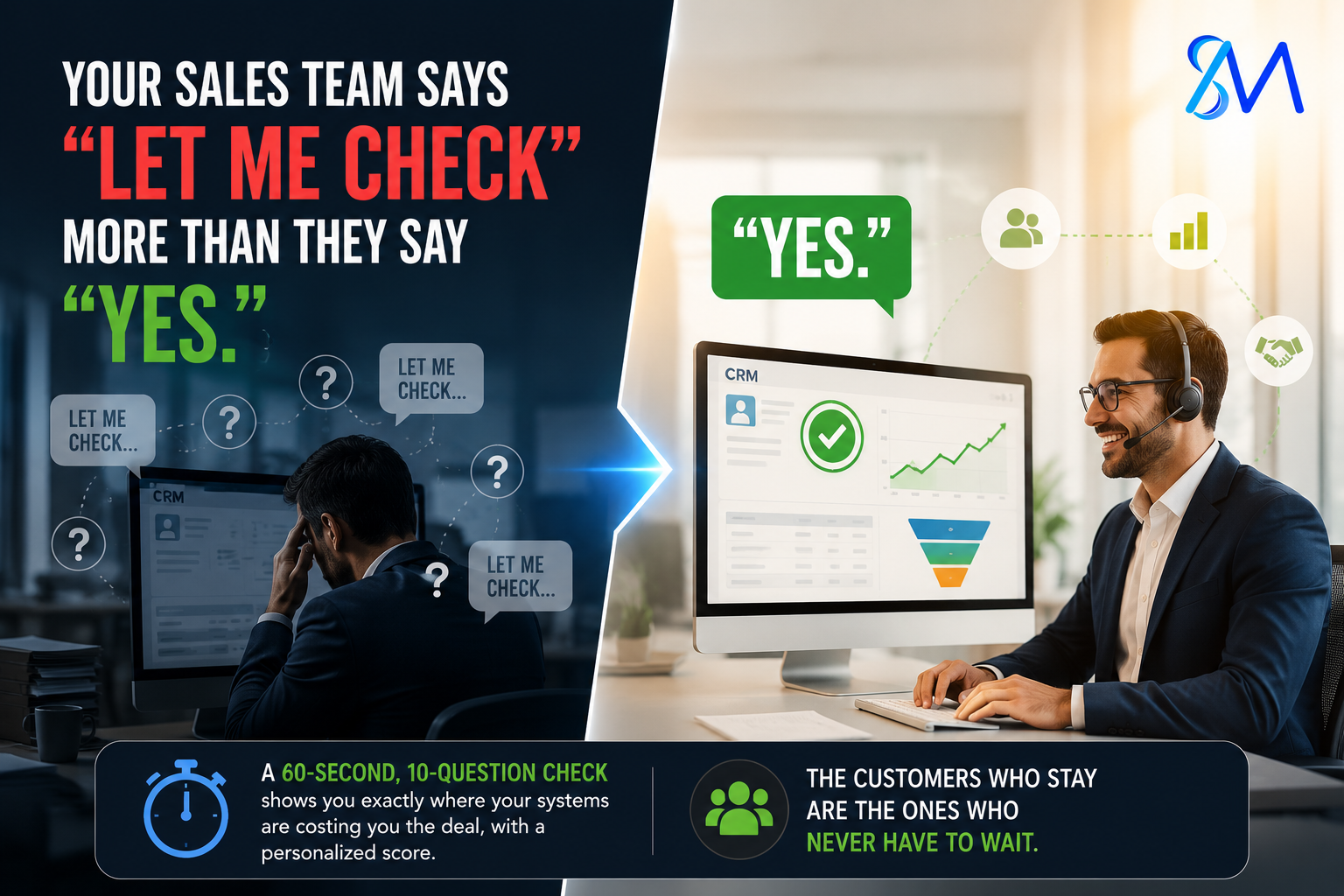
The demo always goes perfectly. That is what demos are built for. Every screen loads instantly, every record imports cleanly, and every workflow completes without a single error message. What a CRM or ERP demo never shows a buying committee is what happens once the platform is running your real data, under your real operational pressure, three years into production use.
Here is what most buying teams never think to ask before signing, because nobody presents it as a question worth asking in the first place.
The Questions the Demo Never Answers
Ask what happens when a record fails validation in the middle of a bulk import. Does the system flag only the one bad row, or does it silently drop three good records along with it. This single behavior determines how much manual cleanup your team inherits every time someone runs a data migration or bulk update.
The gap is rarely where it first appears. Most operations leaders who take the ERP Fit Quiz find the real friction point is one layer deeper than where they have been looking.
→ See Where Your Operations Actually Stand — 2 Minutes→ Speak with Our Team
Ask who can pull last month’s data back out if you ever decide to leave the platform. Not simply whether export is possible, but in what format, how complete the export actually is, and how many clicks and support tickets it takes to get a usable file. Data portability is rarely tested until the relationship is already ending, which is the worst possible time to discover the answer.
Ask what the system does the exact moment two people edit the same record at the same time. In most platforms, someone’s change quietly disappears without a visible warning. Find out whose change wins before it costs you data during your busiest week of the quarter, not after.
Ask to see the error log from a real client account, not a sandbox demo environment. A clean sandbox tells a buying committee nothing meaningful about how a system behaves three years into real operational use, with real data volume and real edge cases accumulated over time.
Ask what breaks when your team’s most common workaround gets automated instead of removed. Automating a bad habit does not fix it. It simply makes the bad habit faster and harder for anyone to notice.
Every one of these questions takes under two minutes to ask during a vendor call. Almost nobody asks them before signing, and the cost of that gap surfaces reliably around month three of a live implementation.
How SuperBotics Approaches CRM and ERP Selection
SuperBotics CRM and ERP engagements begin with a process audit before any platform configuration work starts. We map how a sales, service, or operations team actually works day to day, rather than the idealized workflow described in a vendor’s sales deck, and we configure the selected platform around that operational reality.
| Selection Step | What It Protects Against |
|---|---|
| Process audit before configuration | A platform configured for reality instead of an idealized sales pitch |
| Validation and import stress test | Silent data loss during bulk imports and migrations |
| Data portability review | Being locked into a platform with an incomplete or costly export path |
| Concurrent edit and error log review | Invisible data loss and undisclosed failure modes at scale |
Our CRM and ERP delivery spans Salesforce, Zoho, SAP, Microsoft Dynamics, Odoo, and OpenText, with implementation, integration, and adoption design included in every engagement rather than sold as a separate line item after go live. A platform your team actually trusts enough to use daily is worth significantly more than one they quietly build workarounds around within the first ninety days.
We also test how the platform behaves under a genuinely messy version of your real data, not the clean sample dataset most vendors use in a demo environment. Duplicate records, inconsistent formatting, and partial fields are the norm in any system that has been in use for more than a year, and how a platform handles that mess during migration determines how much manual cleanup your team inherits in the first ninety days of going live.
In one CRM selection engagement, the shortlisted platform performed flawlessly against the vendor’s own sample dataset during the demo. When we ran the same import process against the client’s actual, several years old customer records, roughly twelve percent of records failed validation silently, without any visible warning to the user running the import. Surfacing that behavior before signing avoided a data quality problem that would otherwise have gone unnoticed for months after go live.
The Proof Behind This Work
The root cause behind fragmented CRM and ERP adoption is almost always the same across the sales led organizations we have supported in the US, UK, and Europe. The platform was configured for the process it was sold on, not the process the team actually runs. When a tool does not match daily reality, the team adapts around it, and reported data quality degrades from the very first week of use.
Across our enterprise engagements, clients who complete a process audit before configuration consistently avoid the shadow spreadsheet problem, where leadership ends up building the reporting it actually needs outside the platform it paid for.
What SuperBotics Specifically Offers
SuperBotics runs CRM and ERP selection, implementation, and adoption engagements built around the questions most demos never answer: validation behavior, data portability, concurrent edit handling, and real world error history. Every engagement includes the process audit up front, so the platform gets configured around how your team actually operates rather than around a demo script.
Before your next CRM or ERP decision reaches contract stage, it is worth running the vendor through the four questions above and watching how quickly, and how specifically, they answer.
A demo will always show a platform at its best. The only reliable way to know how it behaves at its worst is to test it against your own messy data and your own edge cases before the contract is signed, not after the first bulk import goes wrong.
To evaluate your next platform decision against the questions demos never show, visit superbotics.com.
The clearest starting point we have seen: know what your operations are actually ready for before deciding what to change.
The ERP Fit Quiz surfaces that picture honestly — no interpretation required.