Why One Report for Everyone Breaks Enterprise Sales Teams — And How to Fix It

abitha
May 26, 2026 · 8 min read

The Report That Fits Everyone Serves No One
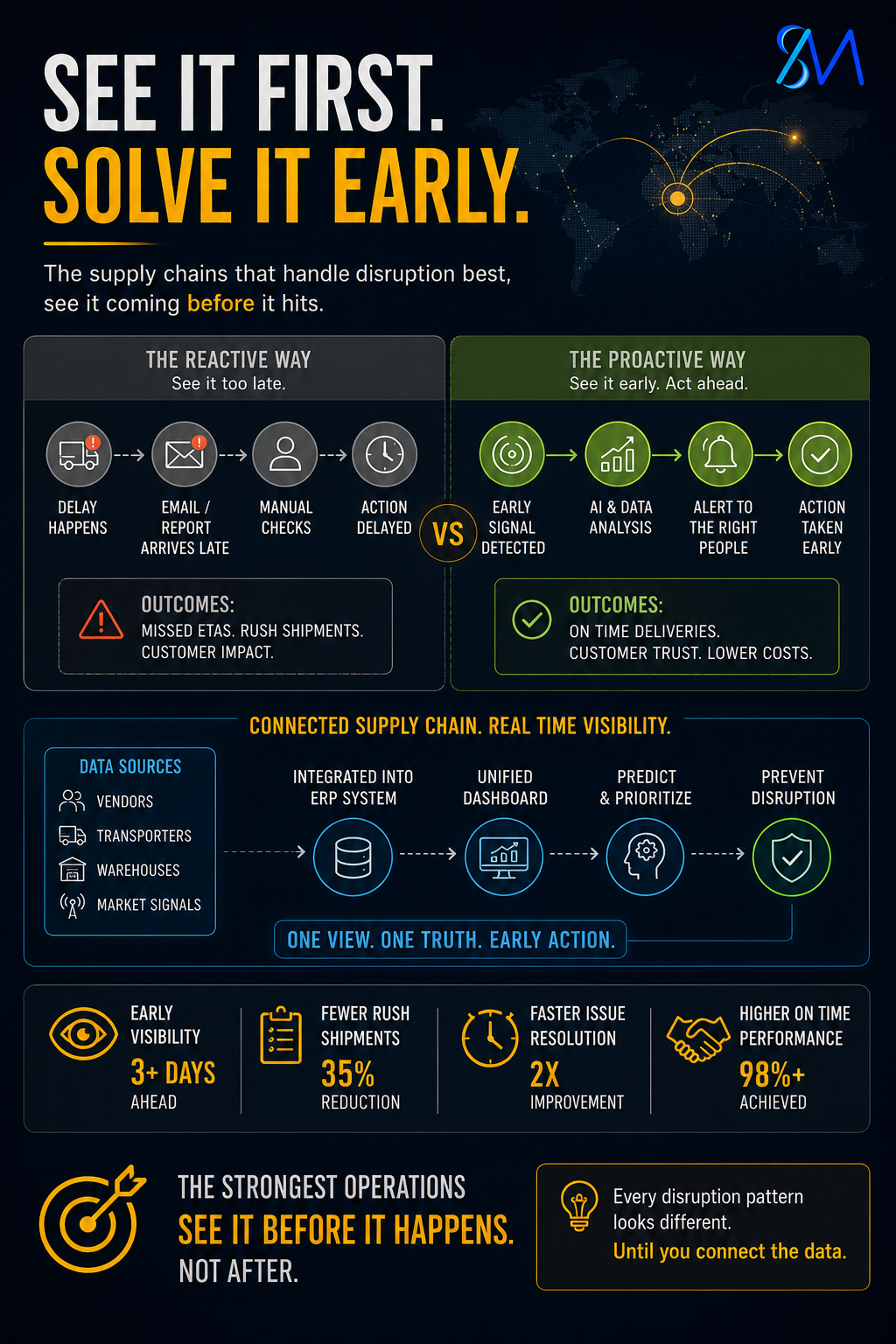
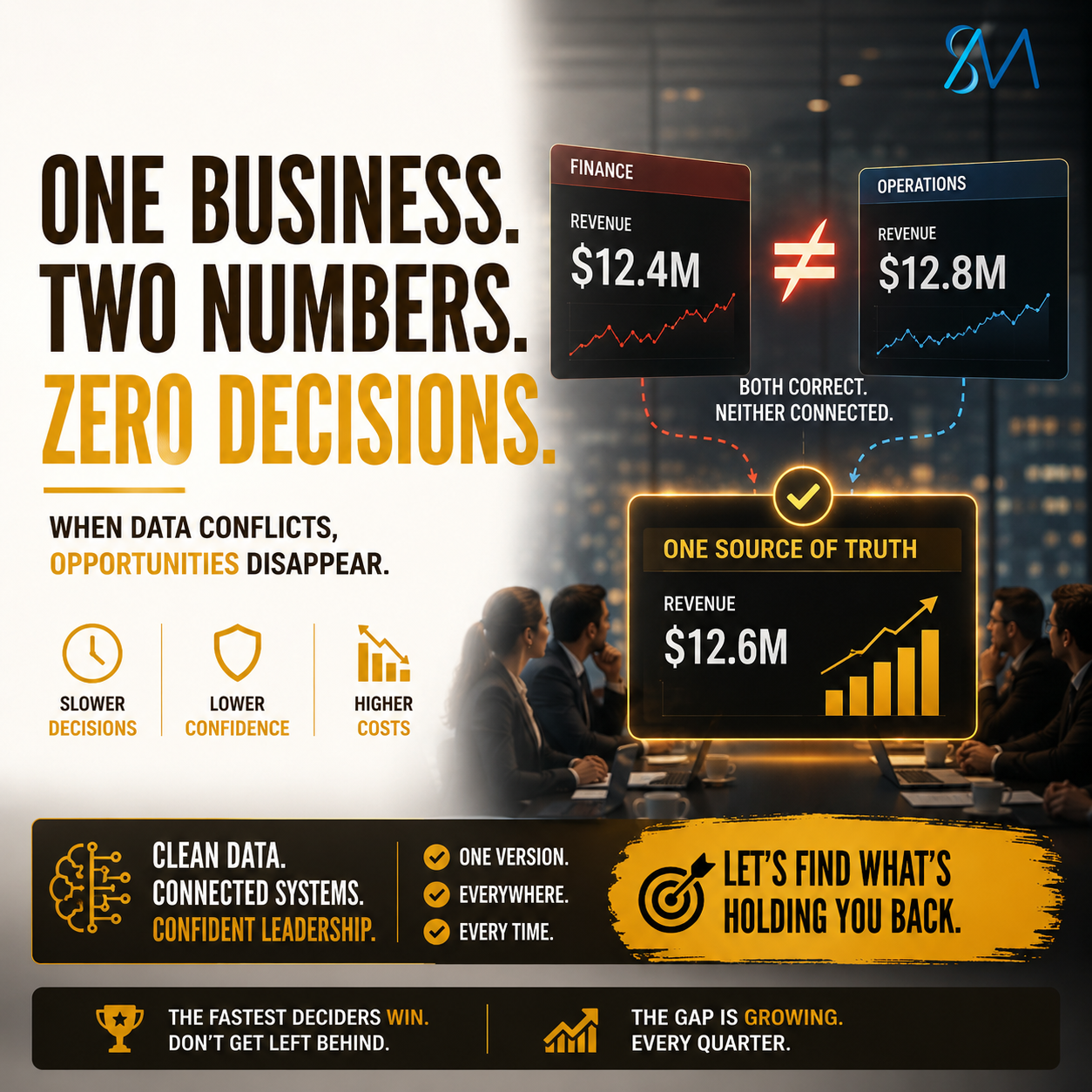
Enterprise sales teams share a common infrastructure problem that rarely gets named directly: the reporting layer was designed for the organization chart, not for how the sales function actually operates. A regional director in Germany running a 12-person team has fundamentally different intelligence needs from a VP of Sales in New York managing a portfolio of strategic accounts. Yet across hundreds of enterprise engagements, the pattern SuperBotics encounters most consistently is a single consolidated sales report — the same columns, the same time windows, the same aggregation logic — distributed to every level of the commercial team simultaneously. The CRM produces it. IT maintains it. Nobody questions whether it is actually serving the decisions being made at each level, because the report exists, it arrives on schedule, and the absence of complaints is interpreted as evidence of satisfaction. It is not. It is evidence of adaptation. Senior sales leaders have learned to extract what they need from a report that was not designed for them. In doing so, they spend hours each week translating data rather than acting on it, and the decisions they make are consistently slower and less precise than the data available to them would support.
The cost of this pattern is significant and almost entirely invisible on any technology investment summary. SuperBotics worked with an enterprise technology client whose sales operations team was spending an estimated fourteen hours per week across five people on report reconciliation — pulling from the CRM, cross-referencing against the ERP, validating against the finance system, and assembling a picture of commercial performance that none of the individual systems could produce on their own. The hours were absorbed into the weekly rhythm and treated as operational overhead rather than as a solvable problem. When the reconciliation process was replaced with a single integrated reporting layer built around how each role in the sales organization actually used the data, those fourteen hours collapsed to under two. The data was always there. The architecture connecting it was not. Designing enterprise reporting around the decisions that need to be made — rather than around the systems that happen to hold the data — is where the recoverable ROI consistently lives.
Why the One-Report-for-Everyone Approach Persists in Enterprise Sales
The reasons enterprise sales teams continue operating with undifferentiated reporting are structural rather than strategic. CRM platforms are configured once at implementation and rarely revisited with the rigor the initial deployment received. The original configuration reflected the needs understood at the time of deployment, which were almost always shaped by what the IT team could build, not what the sales organization needed to operate. As the commercial structure evolved — new territories, new product lines, new account tiers, new go-to-market motions — the reporting layer did not evolve with it. The technical debt accumulated quietly, and the gap between what the CRM could show and what sales leadership needed to see widened until workarounds became permanent and the workarounds became the process. This pattern is not unique to any particular platform. SuperBotics has encountered it across Salesforce, Zoho, Microsoft Dynamics, SAP, and custom CRM environments. The platform is rarely the source of the problem. The configuration strategy is.
The gap is rarely where it first appears. Most operations leaders who take the ERP Fit Quiz find the real friction point is one layer deeper than where they have been looking.
→ See Where Your Operations Actually Stand — 2 Minutes→ Speak with Our Team
There is also a change management dimension that keeps the one-report approach in place long after its limitations are recognized. Sales teams are protective of reporting formats they have learned to navigate, even when those formats are inefficient. The institutional knowledge embedded in knowing which columns to ignore, which filters to apply manually, and which downstream system to cross-check is real and has value in the current state. Proposing a reporting redesign surfaces the risk of losing that institutional knowledge during the transition — and in sales organizations where every quarter matters, that risk carries genuine weight. SuperBotics addresses this not by replacing the existing reporting approach in one step, but by running a parallel architecture during the transition period that allows the new layer to be validated against the existing one before the old process is retired. The institutional knowledge is preserved and transferred. The inefficiency is removed. The result is a sales organization operating with greater precision, greater speed, and complete confidence in the data supporting every commercial decision.
How SuperBotics Approaches Sales Reporting Redesign
The SuperBotics engagement model for enterprise sales reporting begins with a discovery phase that maps how reporting is actually used rather than how it was intended to be used. This distinction matters more than most organizations expect. Implementation documentation describes the intended use. Observation of how sales managers, directors, VPs, and operations teams interact with the data in their weekly workflow reveals the actual use — and the gap between the two is always where the most significant opportunities live. SuperBotics engineers sit with each level of the sales organization, understand which decisions are being made and at what frequency, identify what data is genuinely needed to make those decisions with confidence, and map the current path from raw data to decision. Every manual step in that path is a candidate for elimination. Every reconciliation between systems is a candidate for automation. Every report that requires interpretation before it can be acted upon is a candidate for redesign.
The integration layer SuperBotics builds connects the CRM, ERP, and operational data sources that the sales organization relies on into a unified architecture where each reporting view is constructed specifically for the decision-making context it serves. A territory manager sees pipeline health, activity velocity, and forecast accuracy for their accounts in a format calibrated to their weekly operating rhythm. A VP of Sales sees aggregate commercial performance, deal progression, and revenue predictability across the full portfolio in a format calibrated to the strategic reviews they run. Finance sees the data they need for revenue recognition, commission calculation, and forecasting in a format aligned to their processes. The same underlying data. Three entirely different views. Zero manual reconciliation between them. SuperBotics has delivered this architecture across Salesforce to SAP integrations, Zoho to custom ERP environments, and Microsoft Dynamics to BI platform deployments. The 38% average cost optimization achieved for Managed Teams clients reflects, in large part, the hours recovered from exactly this kind of structural inefficiency.
The Proof: What Changes When Reporting Is Built Around Decisions
The most consistent outcome SuperBotics observes when enterprise sales reporting is redesigned around how each role in the organization actually makes decisions is a measurable increase in the speed and quality of commercial judgment. Decisions that previously required a half-day of data preparation are made in minutes. Forecasting conversations that previously opened with thirty minutes of reconciliation open with the forecast itself. Sales managers who previously spent their Monday mornings building their pipeline view now arrive at that conversation with the view already built, validated, and current. The recovered time is real and it compounds: a sales team of twenty people recovering two hours per person per week represents forty hours of commercial capacity returned to revenue-generating activity every week. Across a year, that number is significant enough to measure and significant enough to attribute directly to the reporting architecture change.
SuperBotics delivered exactly this outcome for a retail client managing enterprise sales operations across nine distribution points in Europe. The commercial team was operating with a four-tool, two-spreadsheet reconciliation process that consumed a substantial portion of each Monday. SuperBotics replaced that process with a single integrated reporting layer that drew from the ERP, the CRM, and the warehouse management system simultaneously, producing role-specific views for each level of the sales and operations structure. The Monday reconciliation disappeared. The data the team needed was present, current, and structured for the decisions they needed to make. The 4x faster insight cycle that SuperBotics consistently achieves for enterprise AI and integration clients is built on exactly this foundation: not adding more dashboards to an already complex environment, but reducing the distance between data and decision by eliminating every manual step in between.
What SuperBotics Delivers for Enterprise Sales Reporting
SuperBotics designs and implements role-specific sales reporting architectures for enterprise organizations across manufacturing, retail, financial services, and technology sectors. The engagement begins with a structured discovery that maps decision flows and data dependencies across the full commercial structure. It progresses through integration design, connecting CRM, ERP, and operational platforms through an architecture that eliminates manual reconciliation and produces reporting views calibrated to each level of the sales organization. It concludes with a validation phase where the new architecture runs in parallel with the existing process until the commercial team has confirmed that every decision they previously made with manual preparation can now be made with greater speed and greater confidence from the integrated layer. SuperBotics supports Salesforce, Zoho, SAP, Microsoft Dynamics, Odoo, and custom CRM environments. Engagements are delivered by cross-functional pods onboarded and delivering within ten business days, drawing on 120 plus specialists and a 6.8-year average client partnership tenure that reflects the depth of the relationships SuperBotics builds with every organization it serves.
The enterprise sales organizations achieving the strongest commercial performance are not the ones with the most data. They are the ones where every person in the commercial structure has exactly the data they need, in the format that supports their specific decisions, available without delay and without preparation. That is not a reporting aspiration. It is an architecture decision. And it is one SuperBotics has delivered across 500 plus projects in 14 countries. To explore what a reporting architecture built around your commercial structure would look like for your organization, visit superbotics.com.
The clearest starting point we have seen: know what your operations are actually ready for before deciding what to change.
The ERP Fit Quiz surfaces that picture honestly — no interpretation required.